
上节内容讲解了过采样原理以及利用过采样进行数据中心位置的采样,从而消除采样时由于采样点相位不确定带来的亚稳态、抗干扰性能差,数据误判等因素。本节内容介绍另外一种常用的方法,即将过采样的每个值进行统计,观察在一个数据位的采样中0与1的比例,从而判定该位是0还是1。例如在位的采样中,如果是8倍过采样,则每个数据位总共采样8次,理论上讲如果该数据位为0,则8次采样的值都应该为0。如果该位为1,采样的8次结果都应该为1,但由于频率偏移,采样相位偏移,噪声等各种因素的影响,最终会出现非全1和非全0的情况。因此需要利用判决。下面就起始位的判多采样为例进行介绍。为了方便说明问题,如图1,2展示了奇数次过采样(9次)对数据位(bit)的采样过程。实际采样中一般采用偶数次过采样(如4次或8次等),这与2进制的进位特性有关。
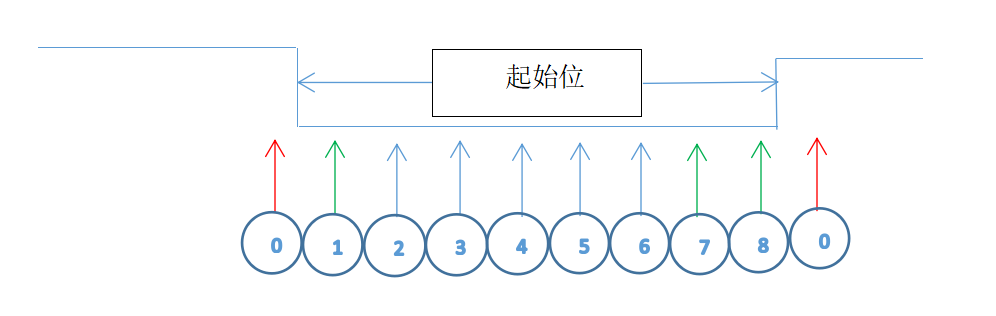
图1
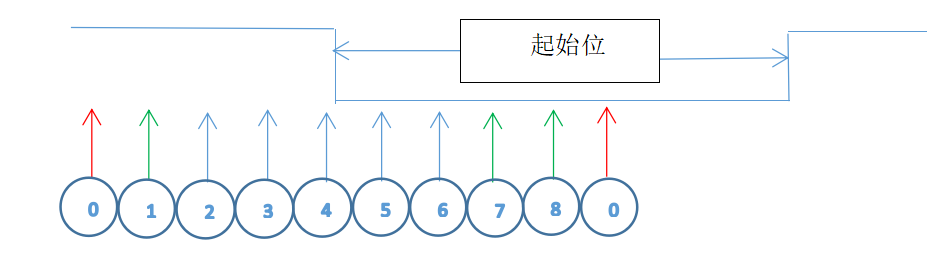
图2
1.判多的方式依然需要边沿检测配合
边沿检测可以正确定位数据的位置。如图1,由于0采样点为高电平,1采样点为低电平,可以知道在此处有下降沿变化。由此推断采样点1,2…8应该分布在整个数据为上。图2可以看出,如果不考虑边沿检测,从采样点1到8可能随机分布在不同的接收位上,极端的情况如图2,一半采样在IDLE位(高电平),一半在起始位,在这种情况下,判多方法也一样无法正确将接收的位提取出来。如图2,从第一个0采样点到到采样点8,统计为1的个数为5,0的个数为4,判定为1,此时没用捕获到起始位。如果从第2个0采样点开始,如果起始位后面的数据为1,9次采样后的结果也是1多0少,因此将会丢失起始位的判定,从而无法成功捕获整个数据帧。因此需要首先检测边沿,确定位起始后在进行判多处理。
除了边沿检测,是否还有其他的方法可以成功捕获起始位呢?可以使用滑动串口的方法,即在IDLE状态通过移位的方式动态统计8采用中1的个数,判定起始位。
2. 判决方法
如图1,一旦边沿确定后,利用采样点1…8的值就可以进行判决,判决方法如下:采样点1…8中1的个数大于等于5,判定该数据位为1,否则为0。
3. 其它接收位的判定
起始位正确定位后,紧随起始位的其它位(数据位、校验位、停止位等)不用判断边沿,直接从下一个的0采样点开始统计每个位的1的个数即可。
例1,利用判多设计RX的参数化接收程序,要求使用8次过采样。
|
1 2 3 4 5 6 7 8 9 10 11 12 13 14 15 16 17 18 19 20 21 22 23 24 25 26 27 28 29 30 31 32 33 34 35 36 37 38 39 40 41 42 43 44 45 46 47 48 49 50 51 52 53 54 55 56 57 58 59 60 61 62 63 64 65 66 67 68 69 70 71 72 73 74 75 76 77 78 79 80 81 82 83 84 85 86 87 88 89 90 91 92 93 94 95 96 97 98 99 100 101 102 103 104 105 106 107 108 109 110 111 112 113 114 115 116 117 118 119 120 121 122 123 124 125 126 127 128 129 130 131 132 133 134 135 136 137 138 139 140 141 142 143 144 145 146 147 148 149 150 151 152 153 154 155 156 157 158 159 160 161 162 163 164 165 166 167 168 169 170 171 172 173 174 175 176 177 178 179 180 181 182 183 184 185 186 187 188 189 190 191 192 193 194 195 196 197 198 199 200 201 202 203 204 205 206 207 208 209 210 211 212 213 214 215 216 217 218 219 220 221 222 223 224 225 226 227 228 229 230 231 232 233 234 235 236 237 238 239 240 241 242 243 244 245 246 247 248 249 250 251 252 253 254 255 256 257 258 259 260 261 262 263 264 265 266 267 268 269 270 271 272 273 274 275 276 277 278 279 280 281 282 283 284 285 286 287 288 289 290 291 292 293 294 295 296 297 298 299 300 301 302 303 304 305 306 307 308 309 310 311 |
`timescale 1ns / 1ps module rx_more_one #( parameter PARITY = "ODD", //"ODD"--odd parity, "EVEN"--even parity, others--no parity parameter STOP_BIT = 1 ) ( input sys_clk, input rst, input rx, input bd8_rate, output reg [7:0] rx_data = 0, output reg rx_rdy = 0 ); localparam [ 3: 0 ] IDLE0 = 0, IDLE1 = 1, START = 2, FIRST_BIT = 3, SEC_BIT = 4, THIRD_BIT = 5, FOUTH_BIT = 6, FIF_BIT = 7, SIX_BIT = 8, SEVN_BIT = 9, EIGTH_BIT = 10, PAR_BIT = 11, STOP1_BIT = 12, STOP2_BIT = 13; localparam EXTRA_COUNT = (PARITY == "ODD"||PARITY == "EVEN") ? 8 : 0; localparam EXTRA_STOP_COUNT = (STOP_BIT == 2) ? 8 : 0; reg [ 1: 0 ] rx_r; reg rx_nedge; // reg [ 7: 0 ] rx_data_tmp; reg rx_rdy_tmp; reg [ 7: 0 ] sample_bit; wire [ 3: 0 ] count_one; wire rx_bit; reg [ 3: 0 ] sample_st_cs, sample_st_ns; reg [ 6: 0 ] sample_count_cs, sample_count_ns; reg [ 6: 0 ] sample_count_cs_r; assign count_one = sample_bit[ 0 ] + sample_bit[ 1 ] + sample_bit[ 2 ] + sample_bit[ 3 ] + sample_bit[ 4 ] + sample_bit[ 5 ] + sample_bit[ 6 ] + sample_bit[ 7 ]; assign rx_bit = ( count_one > 4 ) ? 1'b1 : 1'b0; always@( posedge sys_clk or posedge rst ) if ( rst ) begin rx_r <= 0; rx_nedge <= 0; end else begin if ( bd8_rate ) begin rx_r <= { rx_r[ 0 ], rx }; // rx shift left rx_nedge <= (rx_r == 2'b10) ? 1'b1 : 1'b0; // capture the falling edge end end always@( posedge sys_clk or posedge rst ) if ( rst ) begin sample_st_cs <= IDLE0; end else begin sample_st_cs <= sample_st_ns; end always@( posedge sys_clk or posedge rst ) if ( rst ) begin sample_count_cs <= 0; end else begin sample_count_cs <= sample_count_ns; end always@( * ) begin sample_count_ns = sample_count_cs; sample_st_ns = sample_st_cs; if ( bd8_rate ) begin case ( sample_st_cs ) IDLE0: begin //idle state, waiting for ta least 10bits 1 if ( sample_count_cs == (80 + EXTRA_COUNT + EXTRA_STOP_COUNT ) ) sample_st_ns = IDLE1; else if ( rx_r[ 1 ] ) sample_count_ns = sample_count_cs + 1; else sample_count_ns = 0; end IDLE1: begin //waiting for start_bit's edge sample_count_ns = 0; if ( rx_nedge ) sample_st_ns = START; end START: begin sample_count_ns = sample_count_cs + 1; if ( sample_count_cs == 5 ) begin sample_count_ns = 0; if ( rx_bit ) // sample times bigger than 4 sample_st_ns = IDLE1; // detect start flag else sample_st_ns = FIRST_BIT; end end FIRST_BIT: begin sample_count_ns = sample_count_cs + 1; if ( sample_count_cs == 7 ) begin sample_count_ns = 0; sample_st_ns = SEC_BIT; end end SEC_BIT: begin sample_count_ns = sample_count_cs + 1; if ( sample_count_cs == 7 ) begin sample_count_ns = 0; sample_st_ns = THIRD_BIT; end end THIRD_BIT: begin sample_count_ns = sample_count_cs + 1; if ( sample_count_cs == 7 ) begin sample_count_ns = 0; sample_st_ns = FOUTH_BIT; end end FOUTH_BIT: begin sample_count_ns = sample_count_cs + 1; if ( sample_count_cs == 7 ) begin sample_count_ns = 0; sample_st_ns = FIF_BIT ; end end FIF_BIT: begin sample_count_ns = sample_count_cs + 1; if ( sample_count_cs == 7 ) begin sample_count_ns = 0; sample_st_ns = SIX_BIT; end end SIX_BIT: begin sample_count_ns = sample_count_cs + 1; if ( sample_count_cs == 7 ) begin sample_count_ns = 0; sample_st_ns = SEVN_BIT; end end SEVN_BIT: begin sample_count_ns = sample_count_cs + 1; if ( sample_count_cs == 7 ) begin sample_count_ns = 0; sample_st_ns = EIGTH_BIT; end end EIGTH_BIT: begin sample_count_ns = sample_count_cs + 1; if ( sample_count_cs == 7 ) begin sample_count_ns = 0; if ( ( PARITY == "ODD" ) || ( PARITY == "EVEN" ) ) sample_st_ns = PAR_BIT; else sample_st_ns = STOP1_BIT; end end PAR_BIT: begin sample_count_ns = sample_count_cs + 1; if ( sample_count_cs == 7 ) begin sample_count_ns = 0; sample_st_ns = STOP1_BIT; end end STOP1_BIT: begin sample_count_ns = sample_count_cs + 1; if ( sample_count_cs == 6 ) begin sample_count_ns = 0; if ( STOP_BIT == 2 ) sample_st_ns = STOP2_BIT; else sample_st_ns = IDLE1; end end STOP2_BIT: begin sample_count_ns = sample_count_cs + 1; if ( sample_count_cs == 7 ) begin sample_count_ns = 0; sample_st_ns = IDLE1; end end endcase end end always@( posedge sys_clk or posedge rst ) if ( rst ) begin sample_bit <= 0; rx_rdy_tmp <= 1'b0; rx_data_tmp <= 0; end else begin rx_rdy_tmp <= 1'b0; if ( sample_st_cs == IDLE1 ) sample_bit <= rx_r[ 1 ]; case ( sample_st_cs ) START, FIRST_BIT, SEC_BIT, THIRD_BIT, FOUTH_BIT, FIF_BIT, SIX_BIT, SEVN_BIT, EIGTH_BIT, PAR_BIT, STOP1_BIT, STOP2_BIT : begin if ( bd8_rate ) sample_bit <= { sample_bit[ 6: 0 ], rx_r[ 1 ] }; end endcase sample_count_cs_r <= sample_count_cs; if (( sample_count_cs_r == 7 ) & bd8_rate ) begin //delay one clock case ( sample_st_cs ) FIRST_BIT: rx_data_tmp[ 0 ] <= rx_bit; SEC_BIT: rx_data_tmp[ 1 ] <= rx_bit; THIRD_BIT: rx_data_tmp[ 2 ] <= rx_bit; FOUTH_BIT: rx_data_tmp[ 3 ] <= rx_bit; FIF_BIT: rx_data_tmp[ 4 ] <= rx_bit; SIX_BIT: rx_data_tmp[ 5 ] <= rx_bit; SEVN_BIT: rx_data_tmp[ 6 ] <= rx_bit; EIGTH_BIT: begin rx_data_tmp[ 7 ] <= rx_bit; rx_rdy_tmp <= 1'b1; end default: ; endcase end end always@( posedge sys_clk ) begin if ( rx_rdy_tmp ) begin rx_data <= rx_data_tmp; rx_rdy <= 1'b1; end else rx_rdy <= 1'b0; end endmodule |
仿真程序:仿真程序继续使用上节内容提供的(中心对齐)testbench,
|
1 2 3 4 5 6 7 8 9 10 11 12 13 14 15 16 17 18 19 20 21 22 23 24 25 26 27 28 29 30 31 32 33 34 35 36 37 38 39 40 41 42 43 44 45 46 47 48 49 50 51 52 53 54 55 56 57 58 59 60 61 62 63 64 65 66 67 68 69 70 71 72 73 74 75 76 77 78 79 80 81 82 83 84 85 86 87 88 89 90 91 92 93 94 95 96 97 98 99 100 101 102 103 104 105 106 107 108 109 110 111 112 113 114 115 116 117 118 119 120 121 122 123 124 125 126 127 128 |
`timescale 1 ns / 1 ps module tb ( ); parameter BAUD_RATE = 115200; parameter FREQUENCY = 100_000_000; localparam TX_DIV_COE = FREQUENCY / (BAUD_RATE); localparam RX_DIV_COE = FREQUENCY / (BAUD_RATE*8); reg [18:0] tx_clk_div; reg [18:0] rx_clk_div; parameter PERIOD = 10 ; //100Mhz reg clk; reg rst; reg rx_bd_en; reg tx_bd_en; initial begin clk = 0; #(PERIOD/2); forever #(PERIOD/2) clk = ~clk; end initial begin rst = 1; #50 rst = 0; #300000; // $stop; end wire tx; reg [7:0] tx_count; reg [7:0] tx_data = 0; reg [9:0] tx_send=10'b11_1111_1111; always@(posedge clk or posedge rst) if(rst) begin tx_count = 0; end else begin if(tx_bd_en) begin if(tx_count == 50) begin tx_data <= tx_data + 1; tx_send<= {1'b1, tx_data, 1'b0}; tx_count = 0; end else begin tx_send<= {1'b1, tx_send[8:1]}; tx_count = tx_count + 1; end end end assign tx = tx_send[0]; always@(posedge clk or posedge rst) if(rst) begin tx_clk_div <= 0; rx_clk_div <= 0; tx_bd_en <= 0; rx_bd_en <= 0; end else begin tx_bd_en <= 1'b0; if(tx_clk_div == TX_DIV_COE) begin tx_clk_div <= 0; tx_bd_en <= 1'b1; end else tx_clk_div <= tx_clk_div + 1'b1; rx_bd_en <= 0; if(rx_clk_div == RX_DIV_COE) begin rx_clk_div <= 0; rx_bd_en <= 1'b1; end else rx_clk_div <= rx_clk_div + 1; end wire [7:0] rx_data; wire rx_rdy; //rx #(.PARITY ("NONE")) rx_more_one # ( .PARITY ("NONE"), .STOP_BIT (1) ) rx_inst ( .sys_clk (clk), .rst (rst), .rx (tx), .bd8_rate (rx_bd_en), .rx_data (rx_data), .rx_rdy (rx_rdy) ); endmodule |
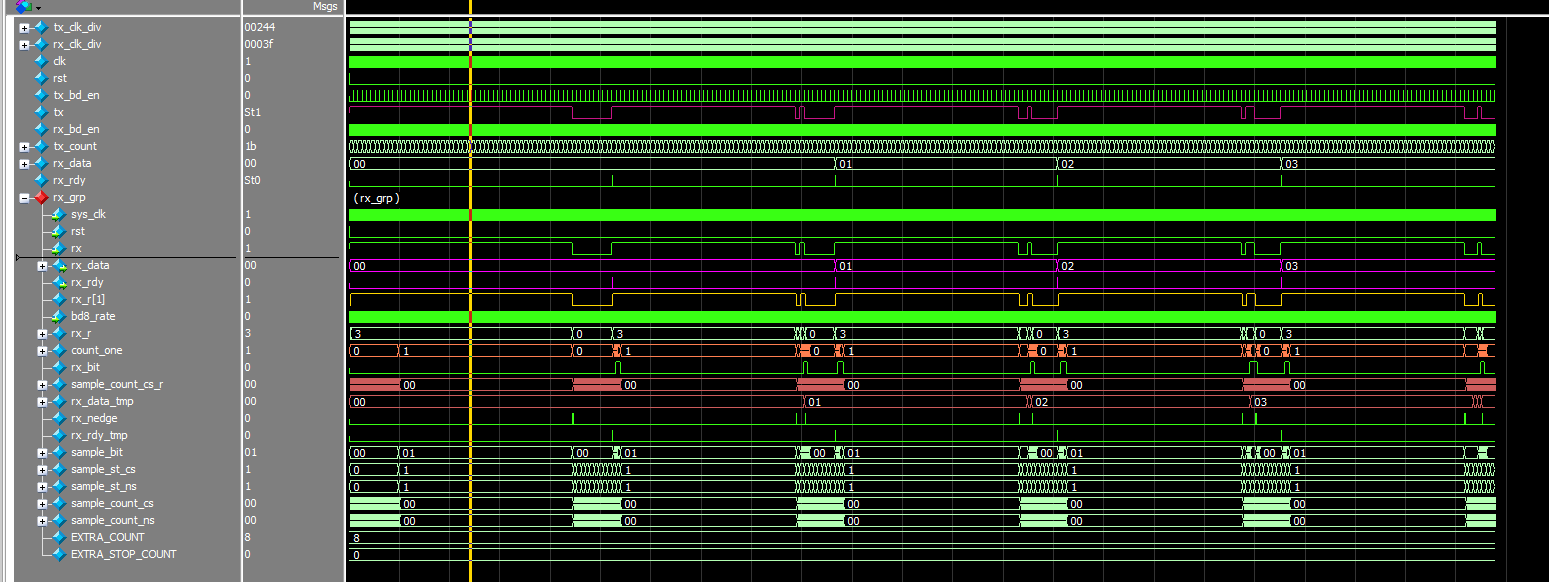
图3-1
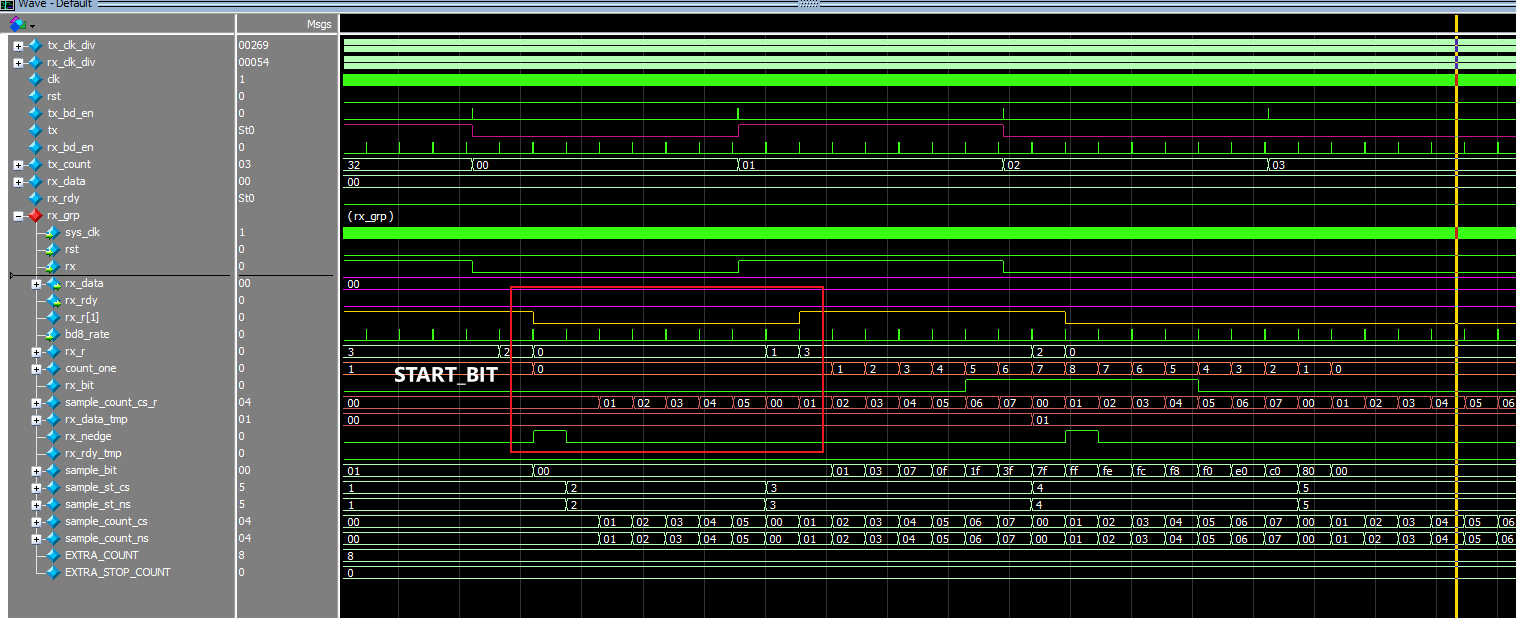
图3-2
由于判多相对于中心对齐的采样相对复杂,因此例1对判多的描述采用了3段式状态机实现,第一段采用实现次态(sample_st_ns)到现态(sample_st_cs)的转换。第二段描述了次态逻辑,根据sample_count_cs的值实现状态跳转。第三段描述了rx的数据采样及实现。